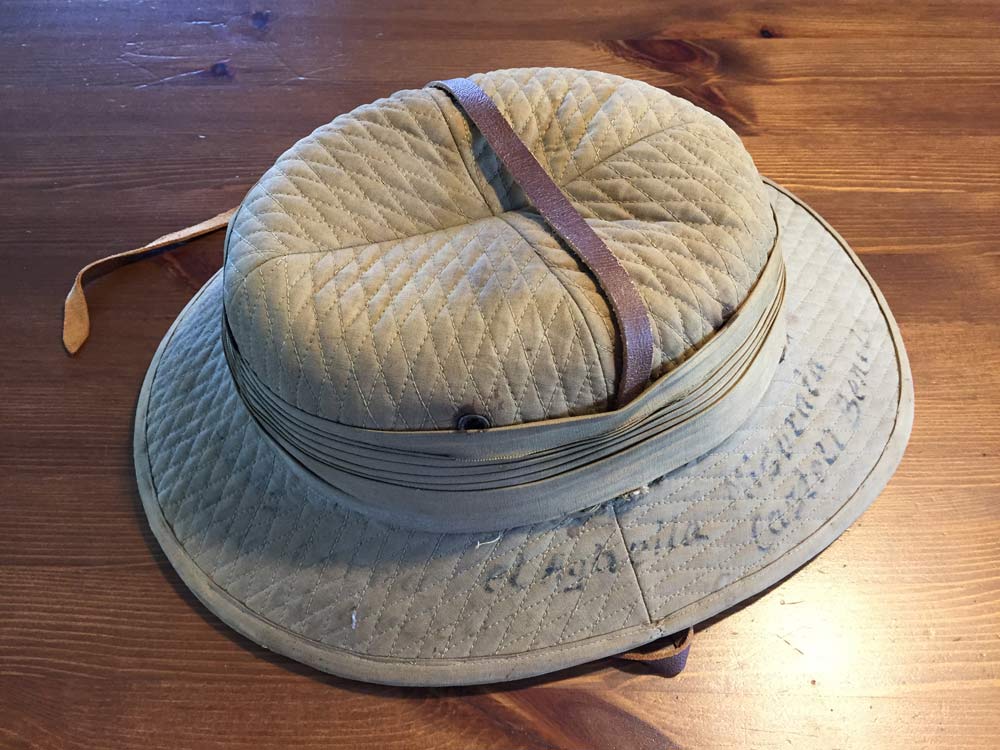
While the term “pith helmet” is used to describe almost all sun helmets, the actual use of “sola pith” material is generally only seen in the construction of helmets made in Asia, including India and the Far East. One of the more popular – and high end – examples of Indian-made sun helmets is the “Cawnpore Tent Club Helmet,” which is noted for its shape and more importantly the quilted linen covering.
All of the examples encountered to date have been made of pith, but recently one has been discovered at a flea market in Munich, Germany, and this example was made of cork. Continue reading
 Recently this reporter came across the most unique of American military sun helmets from the 19th century, but that is actually only half the story. In addition to the first helmet, a second one was found at the Baltimore Antique Arms Show. It is a rather simple New York National Guard type helmet, but what makes this one of note is that while most of those are typically found heavily whitened this one has never been whitened and is in its native/naked khaki.
 Understanding the sun helmets of the U.S. Army and even the United States Marine Corps that were used during the 19th century is rather simple as it comes down to the

 In the summer of 2017 a unique item (above) showed up at auction and this reporter was fortunate to obtain it – it appeared to be a press or form for the American pressed fiber sun helmet. Recently a reader explained to me exactly how this item was used, and now it confirms that this was in fact used by Hawley Products Company, the maker of the pressed fiber helmets.
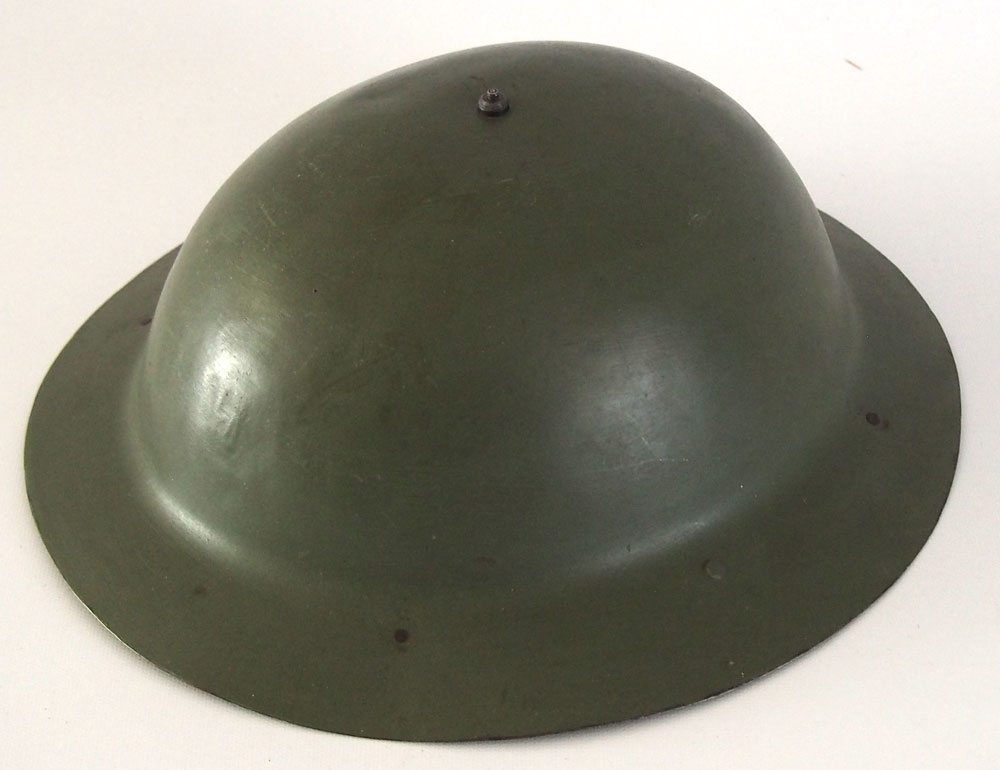 While steel helmets never completely disappeared from the battlefield – and helmets were worn by cavalry units throughout the 18th and 19th centuries – at the outbreak of the First World War in 1914 most British infantrymen wore only the Home Service Helmet as part of a dress uniform and for parade type duties. Forage caps were the standard headdress for soldiers in the field, but by 1916 it was apparent that soft caps as well as sun helmets that were worn in tropical regions weren’t enough to protect against head wounds from artillery barrages or other low velocity impacts.