What’s In a Name? The Pressed Fiber Helmet

Helmet-Fiber1

The American pressed fiber helmet, which was used from the late 1930s until the 1990s, is unique in that it didn’t follow the U.S. Military tradition of naming everything. It had no model number and hence isn’t an M1 Sun Helmet – and for the record that might have been confusing with the M1 Steel Helmet. Continue reading →

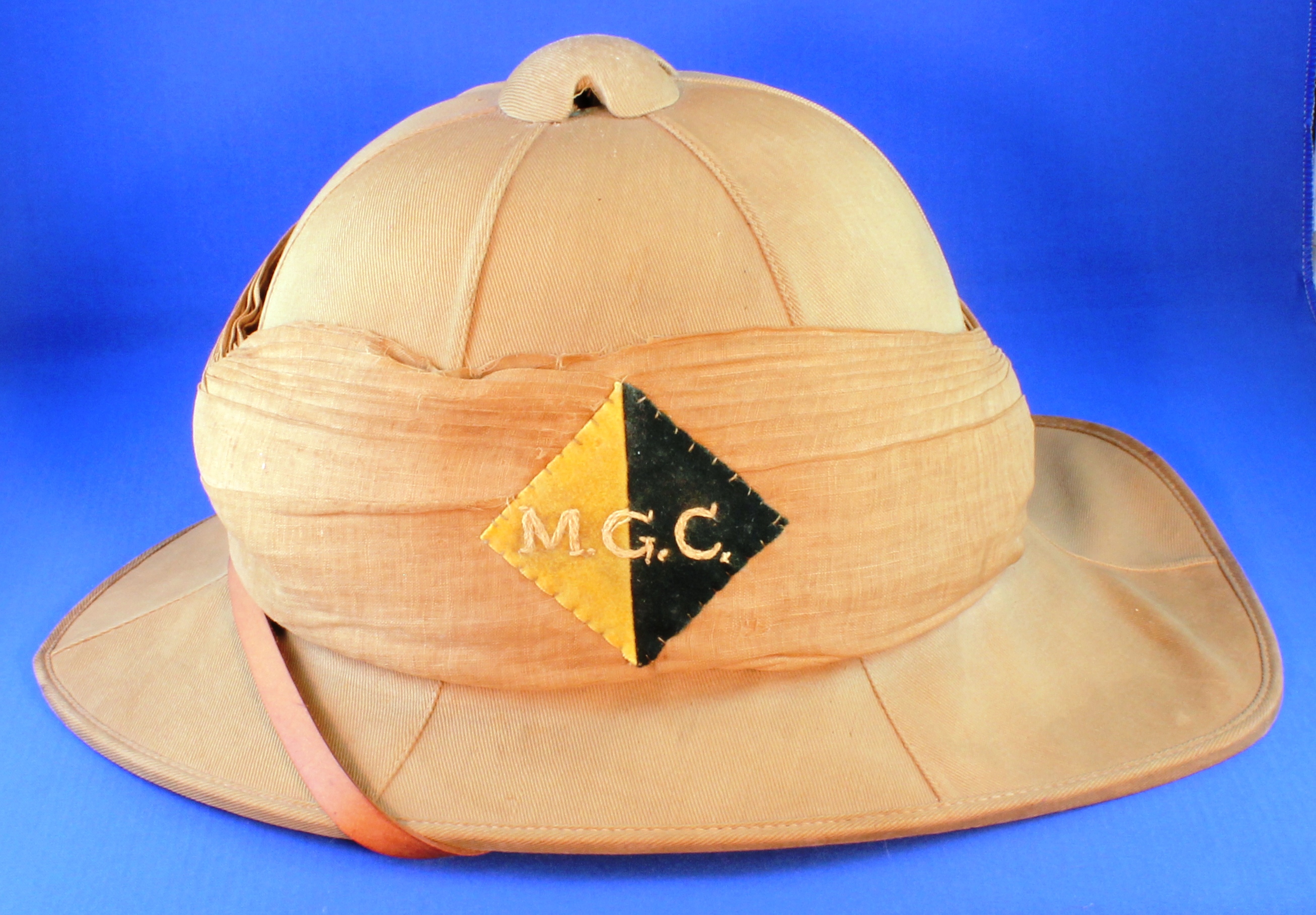
Sun Helmet of the British Machine Gun Corps (MGC)

MGC (1)

(Collection of Robert G. Segel)

The machine gun played a major role in the First World War, and it could be argued that one of the reasons the war on the Western Front turned into a stalemate was that the rapid fire machine gun made a maneuver virtually impossible. The machine gun was thus responsible for the trench warfare that ensued as soldiers “dug in” as each side blasted away at one another.

Ironically perhaps the same gun that created this situation was considered to be the solution. The British Army formed the Machine Gun Crops (MGC) in October 1915 in response to the need for more effective use of machine guns. Continue reading →

Marchand and the Race for Fashoda

Marchand2

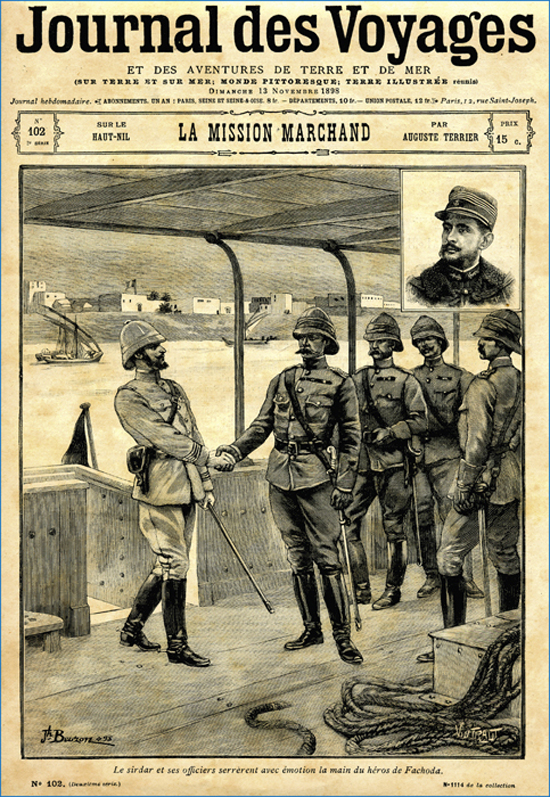
A contemporary newspaper from 1898 that shows the meeting of Marchand and Kitchener

While there are many “eminent Victorians” in British military history the French have fewer such characters. One largely unknown outside of France was Major Jean-Baptiste Marchand, who led the French expeditionary force during the Fashoda Incident.

Born in Thoisssey, Ain during the Second French Empire in 1863, he participated in the French conquest of Senegal and was wounded at the capture of Diena by the French in 1889. He explored the sources of the Niger River and even tracked the source of the Nile. Continue reading →

How to Repair a Damaged Pith Helmet

Titel

The collapse of the very top of the dome is a common “disease” amongst sun helmets made from that light material, pith. In this respect, it does not matter, if a particular helmet had had an adventurous life or was never taken out of his transport tin.  The damage described above is often due to a weak point in the construction.  This article shows a way to repair or at least stabilize a damaged helmet – before it gets completely “puzzled” – by using techniques borrowed from bookbinding. Continue reading →

A Berkshire Lad Revisited

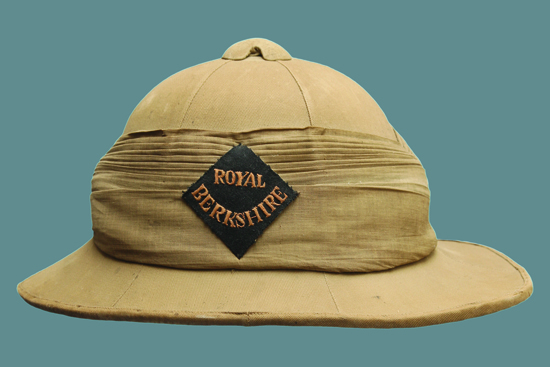
A Wolseley helmet provenanced to Private Frederick G. Rance of the 1st Battalion Royal Berkshire Regiment. This helmet was manufactured by Percy Ayses & Co. (Author’s collection)

A Wolseley helmet provenanced to Private Frederick G. Rance of the 1st Battalion Royal Berkshire Regiment. This helmet was manufactured by Percy Ayses & Co. (Author’s collection)

Last year I wrote a companion article to this one, A Berkshire Lad, but have in the last week been contacted by the family of Pte. Frederick G. Rance. I sensed the import and could not but return the helmet to the family to complement the other memorabilia which they have preserved. Continue reading →

The Conical Hat of Asia

Colonial-French-Troops

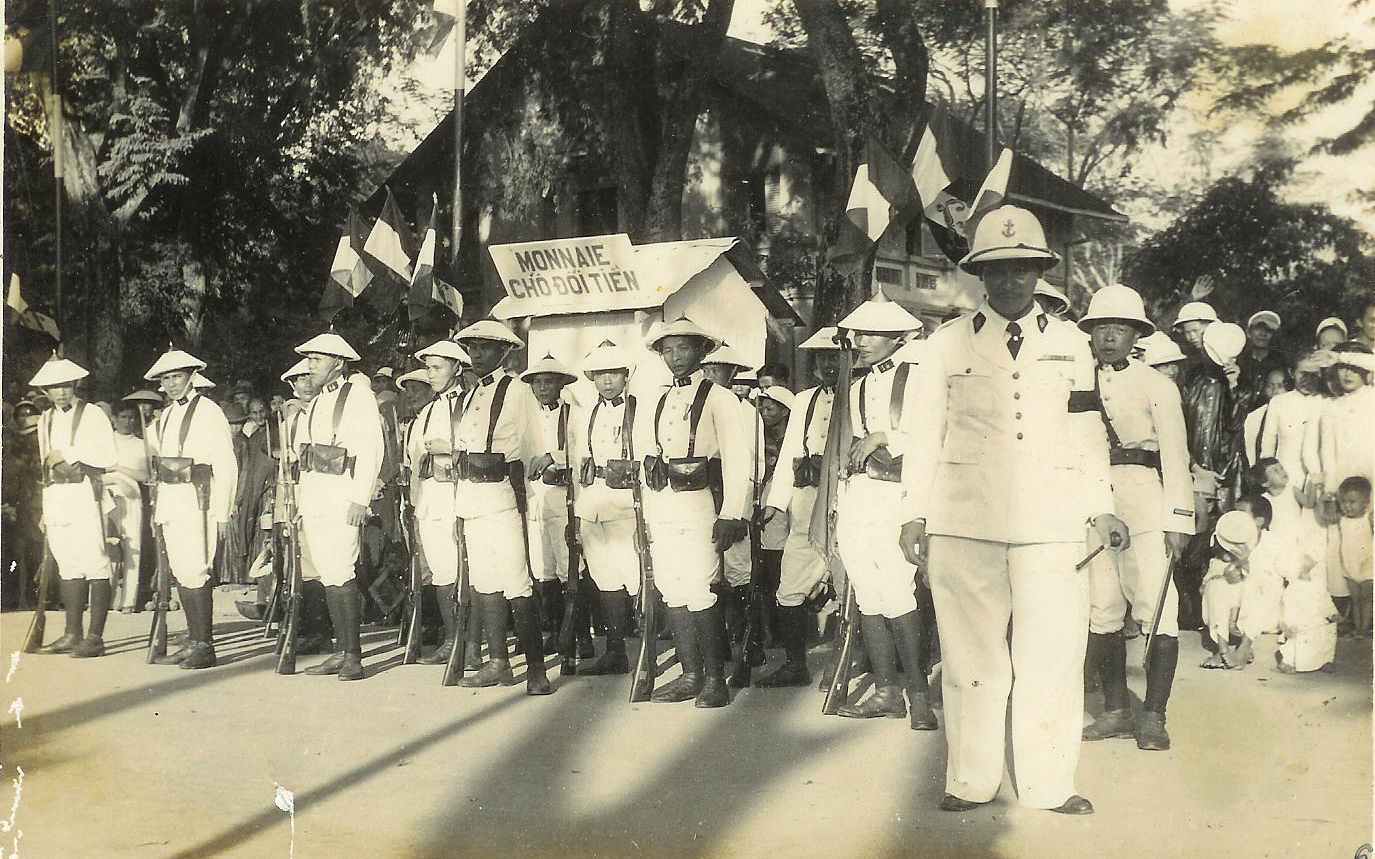
As we previously have noted in our study of the Conical Asian Hat of the Hong Kong Police, this unique version of the sun helmet – known as the “rice hat,” “paddy hat,” or even pejoratively as the “coolie hat”  – was one that had been primarily used by civilians. However, in many cases the line between “civilian” and “military” is blurred, especially in times of insurrections and uprisings. In these cases the conical hat, used as much by so-called peasants in the fields, became a headgear of war.

It was also, as the above photo suggests, a form of true military headgear – with the French and British relying on the conical straw hat for use by indigenous troops in South East Asia and China. The above photo shows French Marine Infantry volunteers in French Indo-China circa 1935. Continue reading →

Turbans of the Indian Army

Turbans-in-India

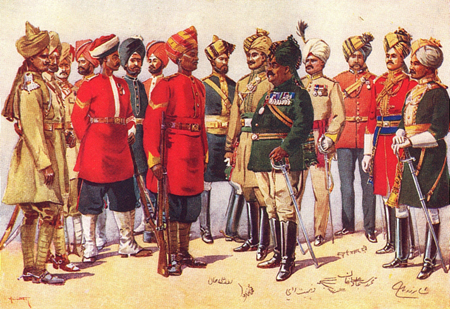
The turban, the traditional headdress of India, is often an object of confusion. As previously noted in our study of the Arabian headdress known as the keffiyeh, the two are often confused. And while they may have a shared origin, and both are made from cloth these two are very distinct. Continue reading →