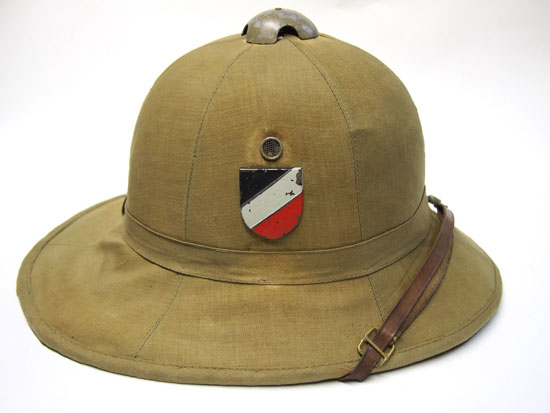
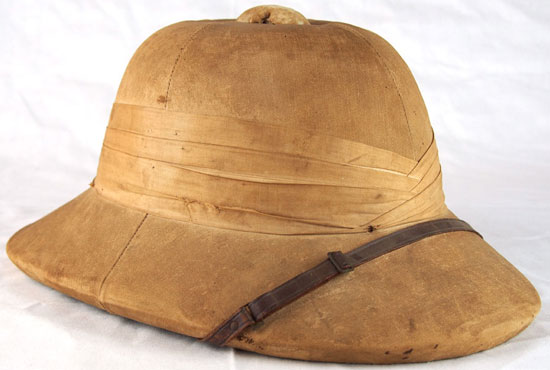
A pith helmet in the capital of the British Empire might not seem that odd at all. A helmet made of pith with a London maker/retailer stamp does seem a bit more odd – especially when one considers that the majority of helmets produced in Great Britain were in fact made of cork. As we’ve noted cork and pith are two distinct materials, and English hatters opted for cork, which came from nearby Portugal; while we have found that Indian hatters worked with sola pith, which was more common in the subcontinent.
There are no doubt countless exceptions to the rule, and both Roland Gruschka and I have discovered Wolseley helmets that seem to have been made in India. This is interesting as the Wolseley was a helmet largely produced in cork. Shortages of the material in World War I resulted in helmets with straw bodies as noted by two examples in my colleague Stuart Bates’ collection, and during World War II shortages of cork resulted in helmets being produced out of pressed felt. Continue reading


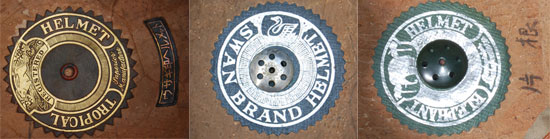 One of the great misconceptions of Japanese tropical headgear of the Second World War is that the pattern known to collectors as “English,” “safari” or “European” was in fact produced outside of Japan. This is likely based on the fact that the helmets are similar in shape externally to the various Indian pattern helmets but also because the maker labels inside are in English.