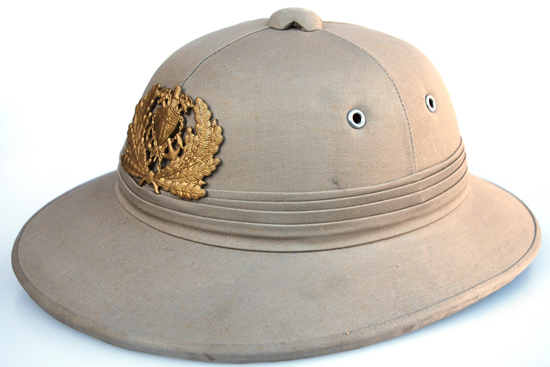
A light fiber helmet of the so-called East German pattern with the badge of the Cuban Navy
German sun helmets are well-established. Imperial Germany had colonies in Africa, and during the Third Reich fielded the infamous Afrika Korps. However, a lesser known sun helmet is one purported to be of East German origin.
A few sources, including Paolo Marzetti’s Elmetti (“Helmets”) note the existence of a “DDR sun helmet, made in fibre material” the use of these helmets would seem to be limited. The Deutsche Demokratische Republik (DDR), or East Germany had no colonies of course. East German soldiers of the NVA (Nationale Volksarmee or National People’s Army) did serve as advisors to various African countries during the Cold War and it is possible the helmets may have been developed for this purpose. Continue reading
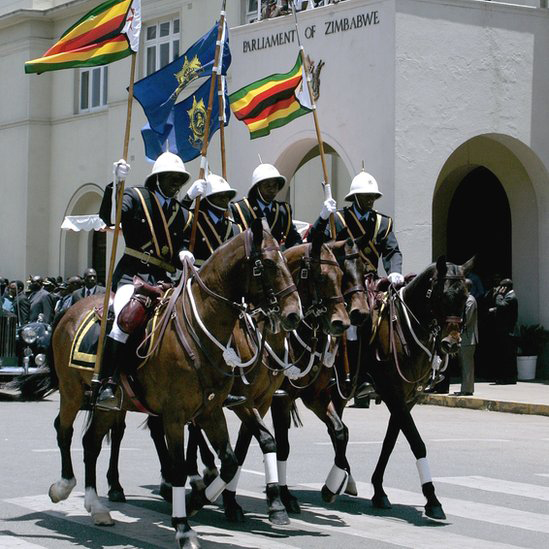
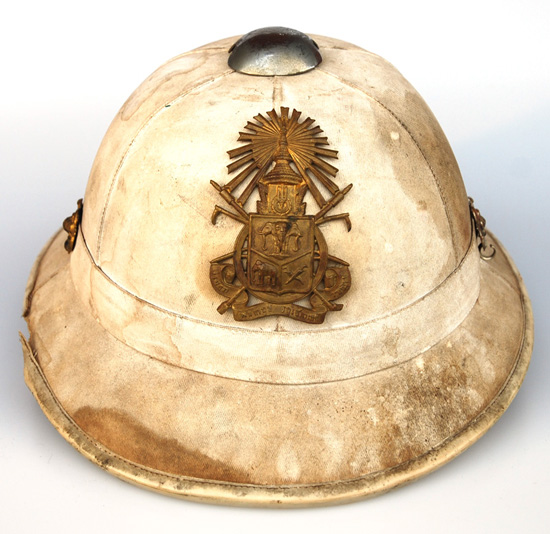
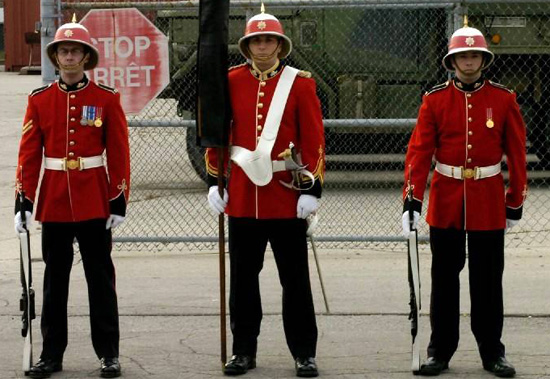 While the Wolseley helmet was declared obsolete in 1951 in a List of Changes, several British and Commonwealth units continue to wear the helmet a part of the full dress uniform. This includes of course the Royal Marines, which wear the helmet as part of their number 1 or dress uniform. Additionally, Australian Army Bands, including the Royal Military College Duntroon, still wear the Wolseley helmet.
 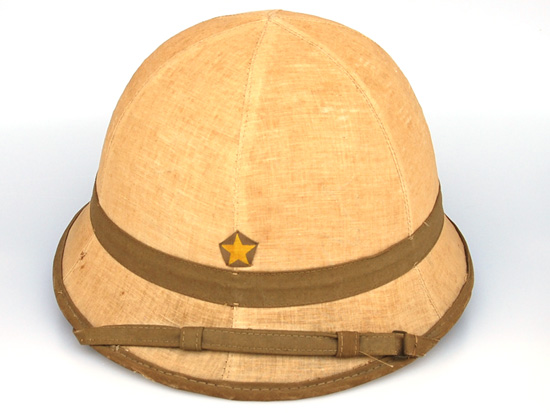 A unique variation of Japanese sun helmets used during World War II is one often referred to as “the officer’s pattern.” Why this particular helmet is considered to be an officer’s version is not known, but it is likely that it is because the character of Colonel Saito, the prison camp commandant in the film The Bridge on the River Kwai wore such a helmet.